The Guide
A guide to styles
Twelve styles, from Louis XIII to Art Deco: dates, characteristics and identification criteria, written by antiques dealers and art historians.
In brief: in France, furniture styles take their names from the monarch or regime of their day, yet their dates do not match the reigns exactly. Three questions are often enough to place a piece: is the line straight or curved? Is the decoration symmetrical? Which woods and bronzes are used?
- 1610 – 1660Louis XIII
- 1660 – 1715Louis XIV
- 1715 – 1730Régence
- 1730 – 1770Louis XV
- 1760 – 1775Transition
- 1770 – 1790Louis XVI
- 1789 – 1804Directoire
- 1804 – 1815Empire
- 1815 – 1830Restauration
- 1852 – 1870Napoléon III
- 1890 – 1914Art Nouveau
- 1920 – 1940Art Deco
Summary table
| Style | Period | Line | Legs | Ornament | Woods |
|---|---|---|---|---|---|
| Louis XIII | 1610 – 1660 | Straight, massive | Turned, joined by stretchers | Turning, diamond-point carving | Walnut, oak, ebony |
| Louis XIV | 1660 – 1715 | Symmetrical, monumental | Baluster, tapering gaine | Sunburst, acanthus, mascarons | Giltwood, ebony, tortoiseshell |
| Régence | 1715 – 1730 | Symmetrical curves | Cabriole, with hoof feet (‘pied de biche’) | Shells, espagnolettes | Kingwood, satinwood, walnut |
| Louis XV | 1730 – 1770 | Curved, asymmetrical | Cabriole, with hoof feet | Rocaille, flowers | Tulipwood, kingwood, walnut |
| Transition | 1760 – 1775 | Gentle curves, crisp corners | Gently cabriole | Greek key, Vitruvian scroll, interlacing | Tulipwood, amaranth, sycamore |
| Louis XVI | 1770 – 1790 | Straight, symmetrical | Tapering, fluted | Beading, ribbons, trophies | Mahogany, tulipwood, satinwood |
| Directoire | 1789 – 1804 | Straight, pared-back | Sabre or tapering | Palmettes, lozenges, stars | Mahogany, fruitwoods |
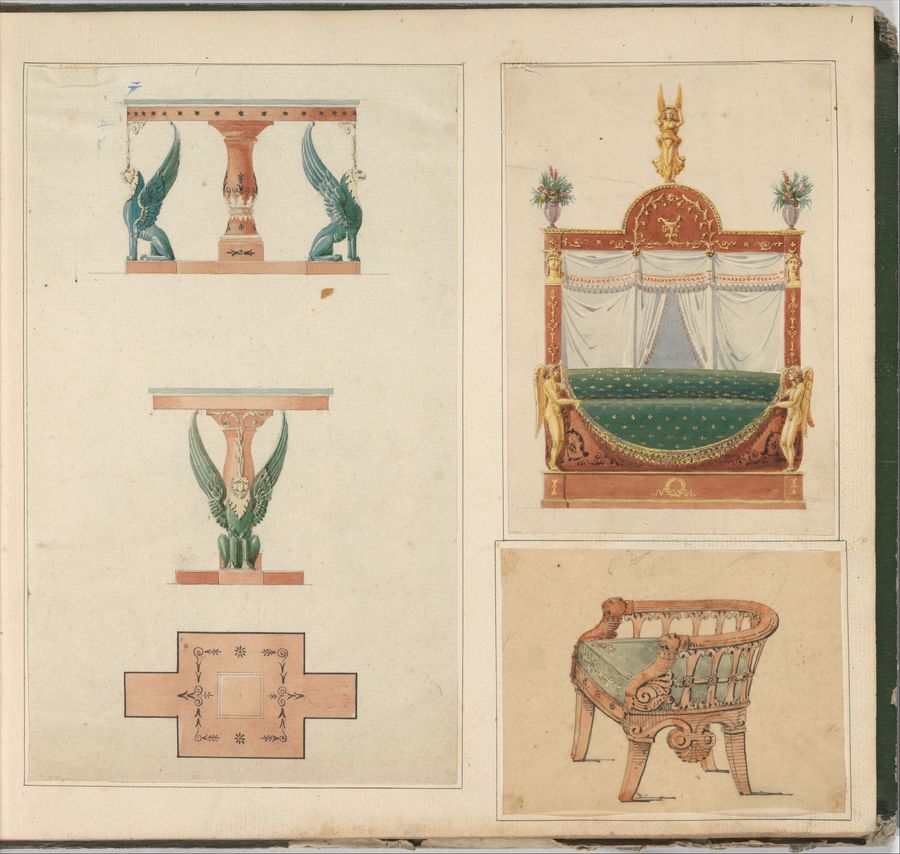
| Empire | 1804 – 1815 | Massive, cubic | Lion’s-paw feet, toupie feet | Swans, Victories, palmettes | Flame mahogany, burr wood |
| Restauration | 1815 – 1830 | Softened, rounded | Hocked or scroll legs | Inlaid rosettes and palmettes | Maple, lemonwood, ash |
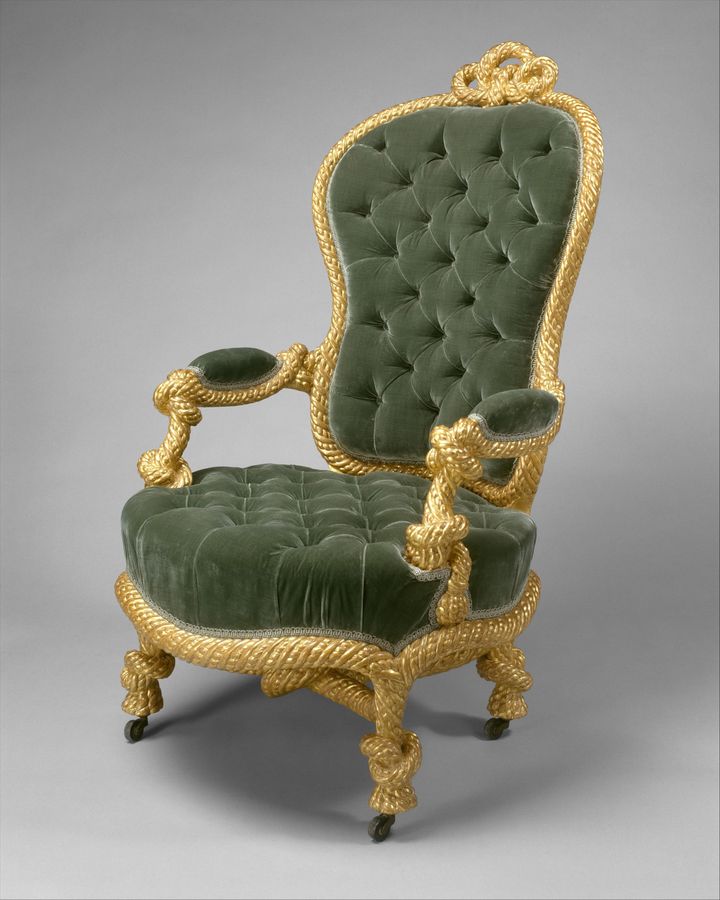
| Napoléon III | 1852 – 1870 | Eclectic | All styles, castors | Brass, mother-of-pearl, buttoned upholstery | Ebonised pearwood, rosewood |
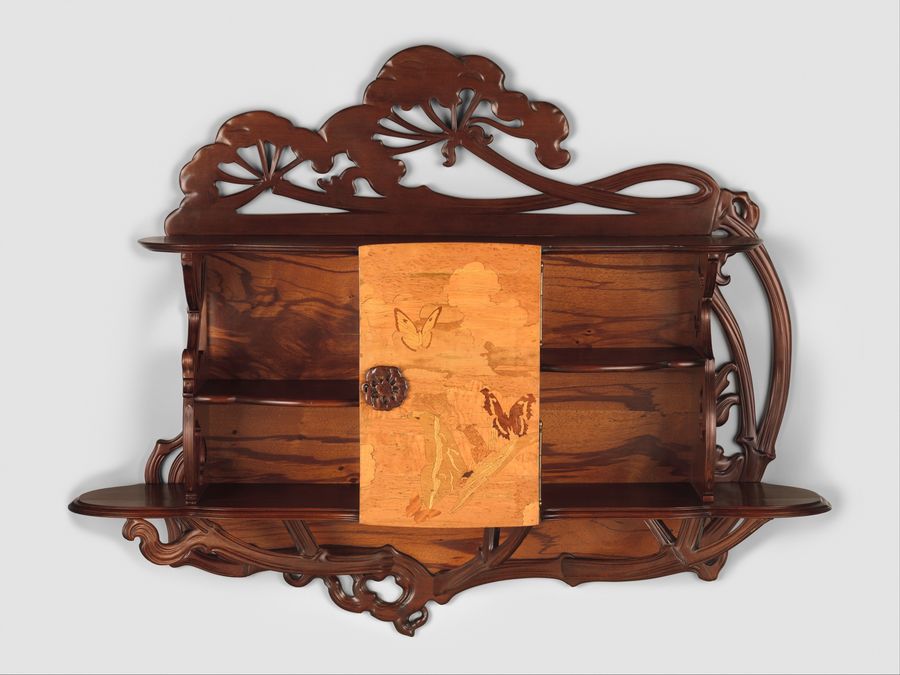
| Art Nouveau | 1890 – 1914 | Curving, plant-inspired | Straight-grained and burr | Umbels, water lilies, insects | Walnut, mahogany, fruitwoods |
| Art Deco | 1920 – 1940 | Geometric, streamlined | Tapered legs or solid plinths | Chevrons, flower baskets, sunbursts | Macassar ebony, rosewood, amboyna |
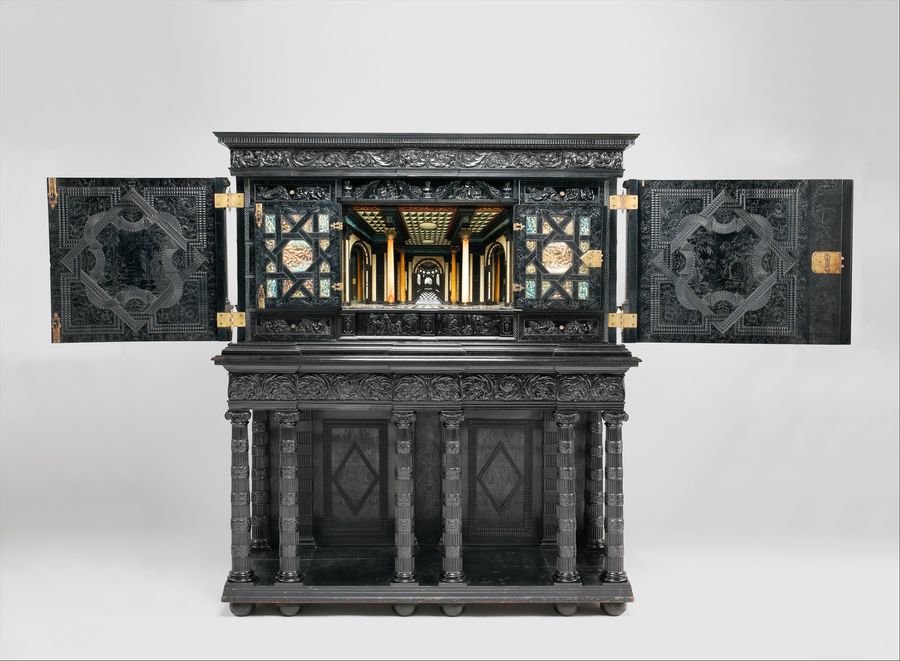
1610 – 1660
Louis XIII
Massive forms, turned wood and the first ebony cabinets: the style that gave the cabinetmaker’s craft its name.
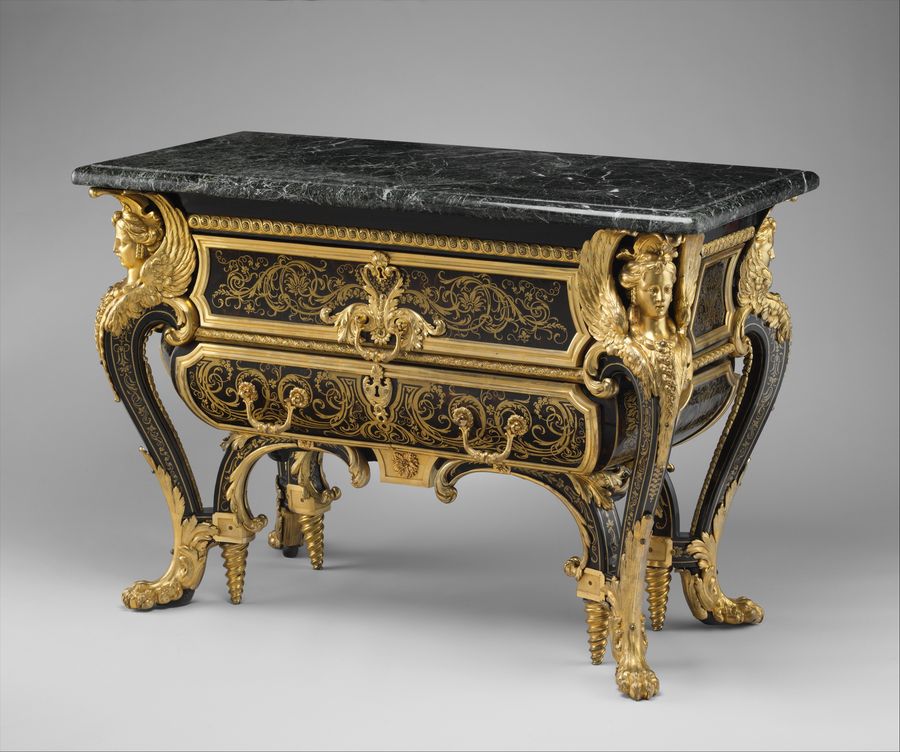
1660 – 1715
Louis XIV
Symmetry, giltwood, Boulle marquetry and bronzes: a court art imitated throughout Europe.
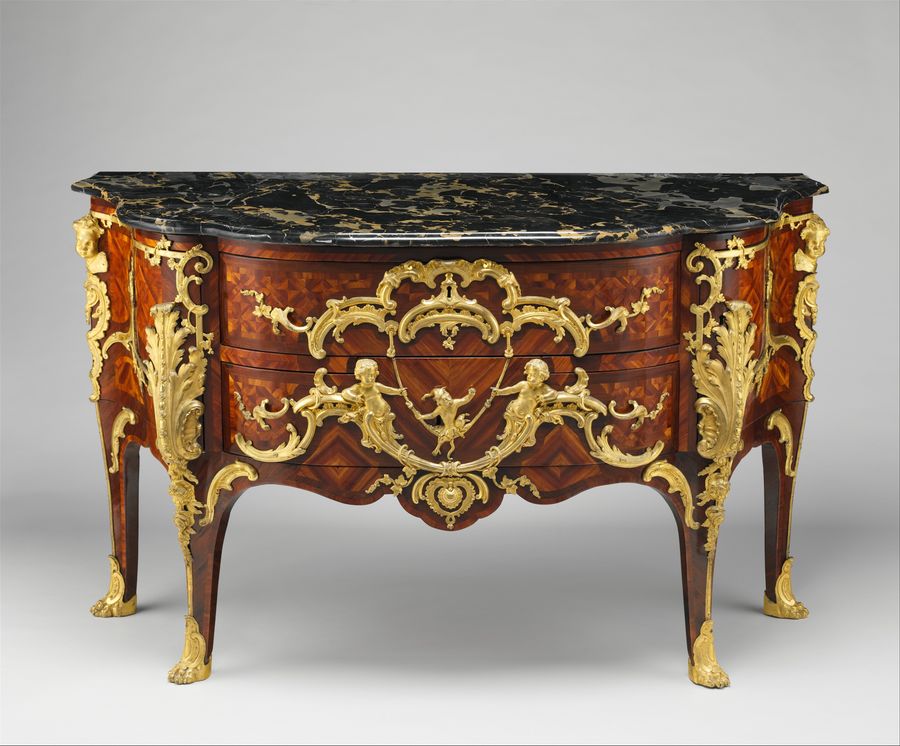
1715 – 1730
Régence
The leg curves, the front swells, the shell is pierced: the transition from the Grand Siècle to Louis XV.
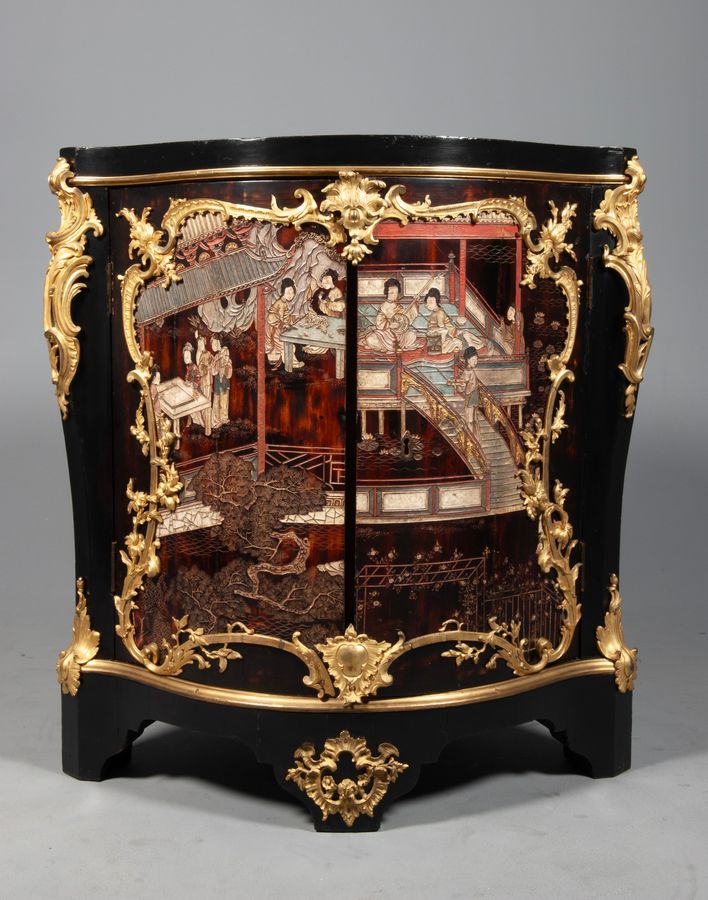
1730 – 1770
Louis XV
Curves, asymmetrical rocaille, cabriole legs and floral marquetry: the high point of Parisian cabinetmaking.
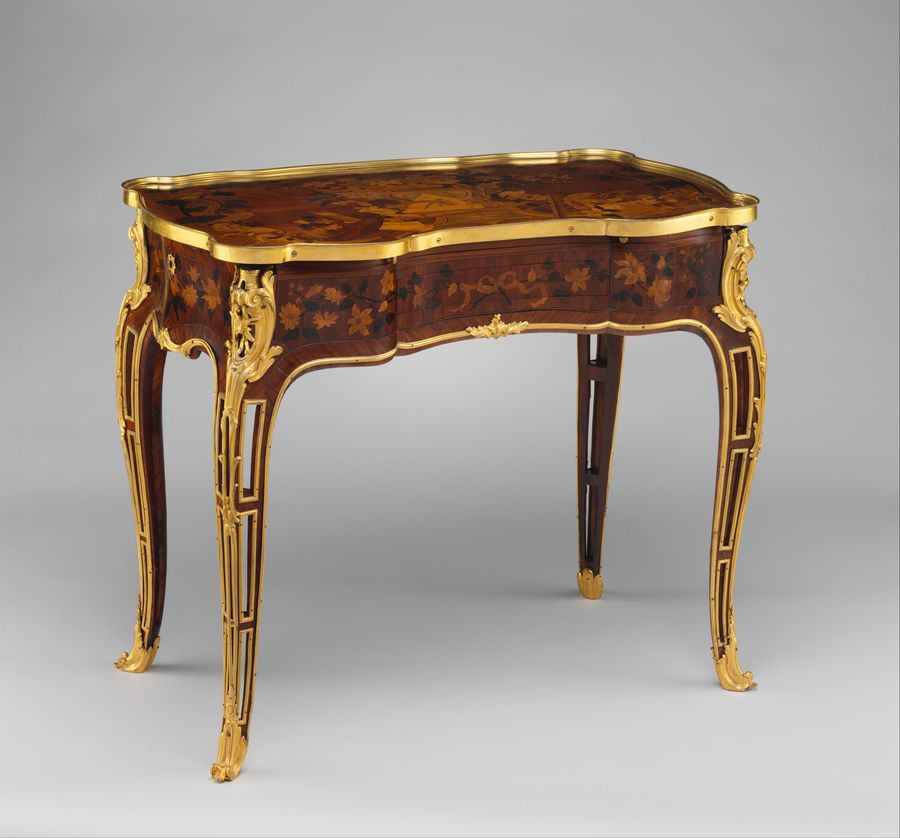
1760 – 1775
Transition
A still-curved silhouette with already neoclassical ornament: the best of two reigns.
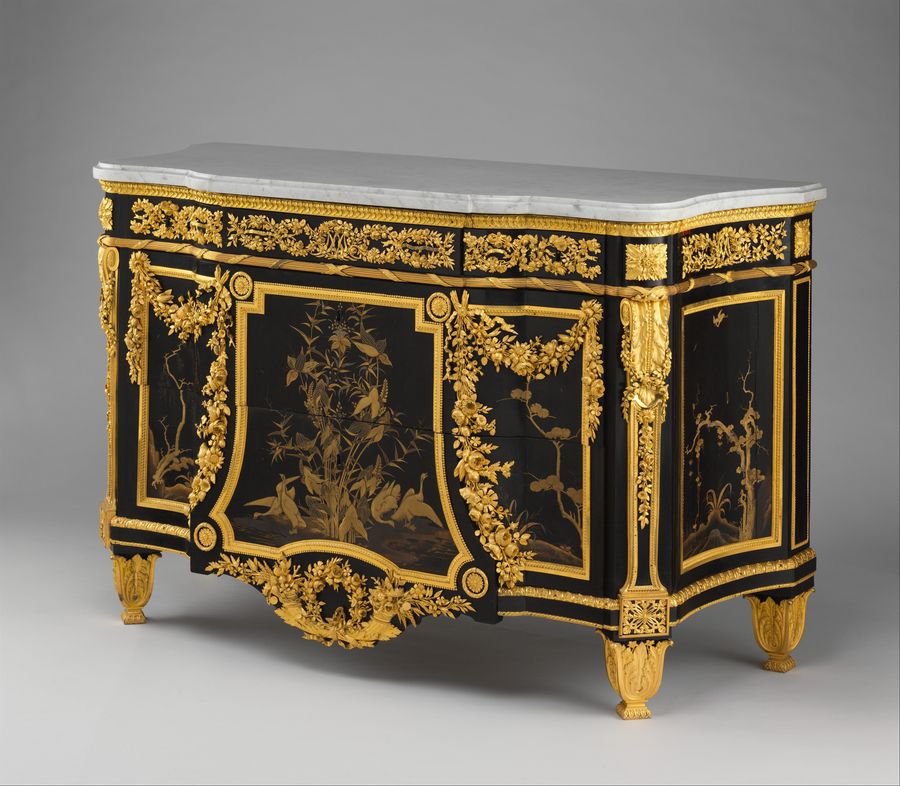
1770 – 1790
Louis XVI
Straight lines, tapering legs, beading and ribbons: the neoclassical elegance of the last years of the Ancien Régime.
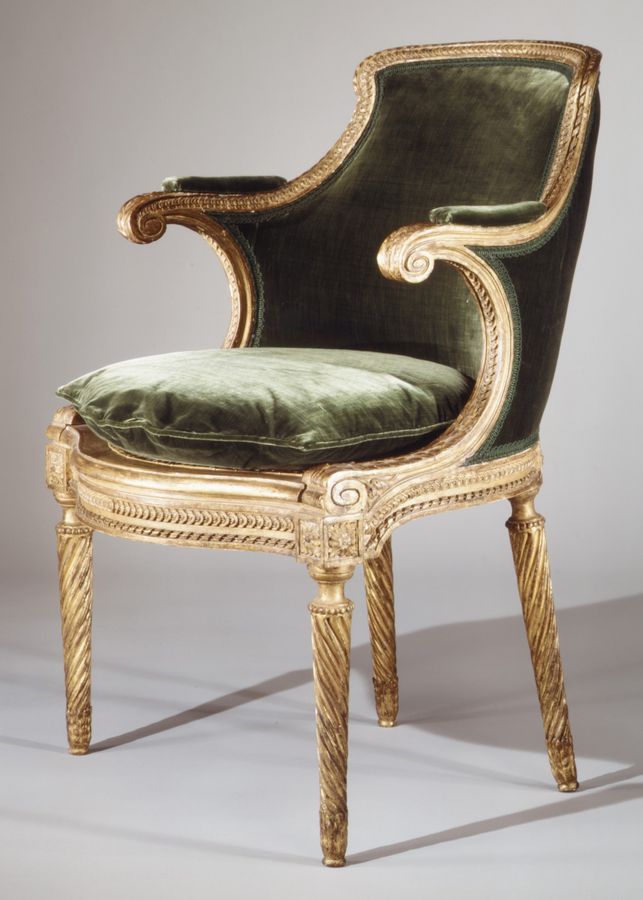
1789 – 1804
Directoire
Rolled-over backs, sabre legs, palmettes: neoclassical restraint after the Revolution.
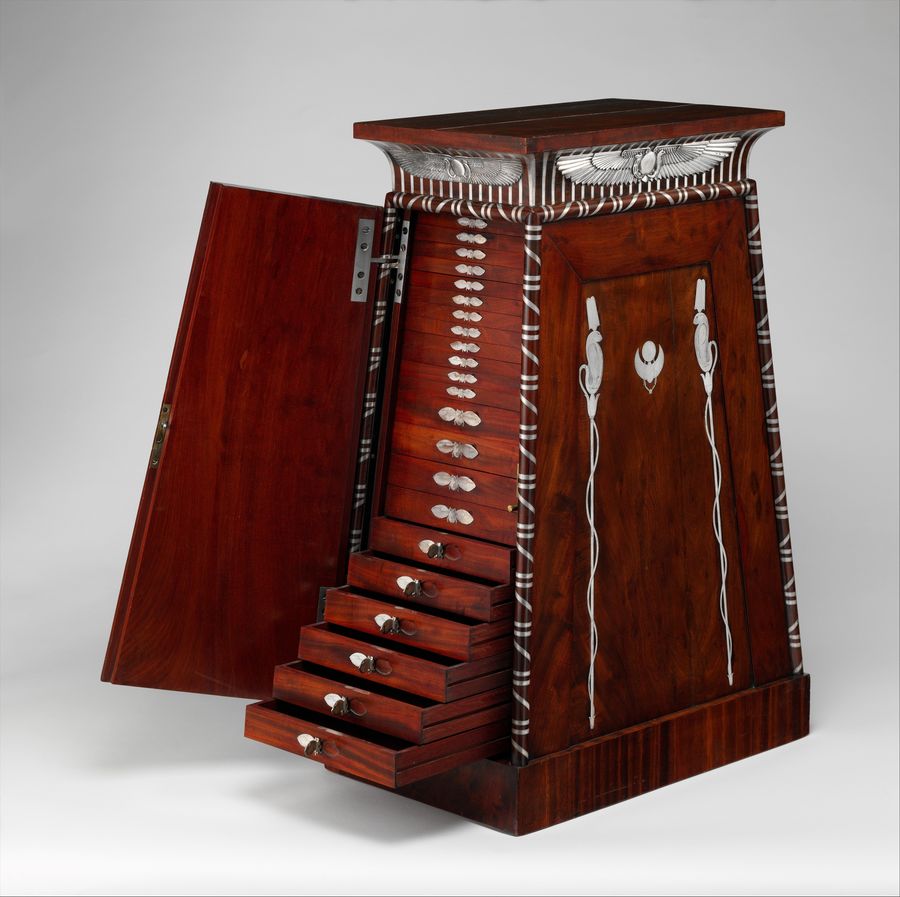
1804 – 1815
Empire
Flame mahogany, antique-style bronzes, swans and victories: an official style in the service of the Emperor.
1815 – 1830
Restauration
Maple, lemonwood and ash set off by dark woods: the Empire softened, more intimate and more bourgeois.
1852 – 1870
Napoléon III
Ebonised wood, brass, mother-of-pearl and buttoned upholstery: every past style reinvented for a triumphant bourgeoisie.
1890 – 1914
Art Nouveau
Whiplash lines, umbels, water lilies and dragonflies: Gallé, Majorelle and Guimard broke with the imitation of the past.
1920 – 1940
Art Deco
Geometry, Macassar ebony, shagreen and lacquer: the style that triumphed at the 1925 Exhibition.