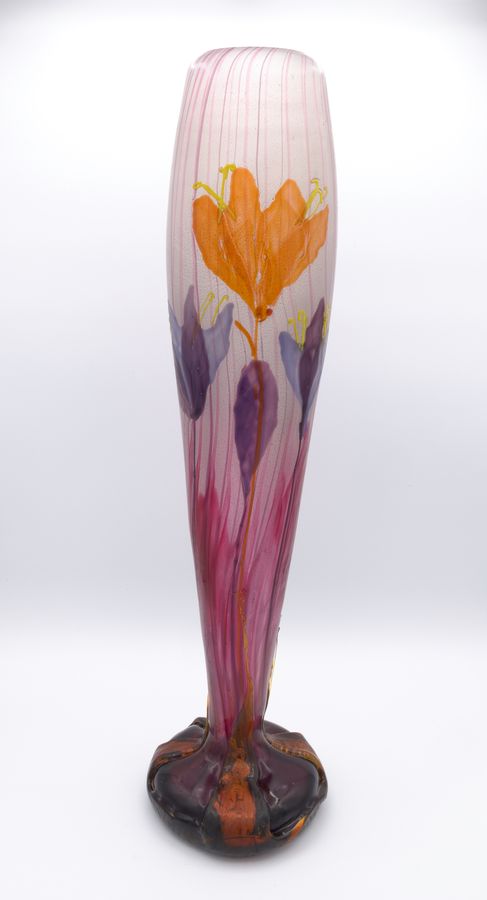
In brief: Émile Gallé (1846–1904) is the leading figure of Nancy Art Nouveau. A glassmaker of genius, he invented new techniques (engraved multi-layered glass, glass marquetry); as a cabinetmaker, he created furniture inlaid with flowers and inscriptions. In 1901 he founded and presided over the École de Nancy.
Biography
The son of a Nancy faience maker and glass merchant, Gallé studied botany, which he would tirelessly translate into glass and wood. He took over the family business and opened a cabinetmaking workshop in the 1880s.
Acclaimed at the Expositions Universelles of 1889 and 1900, in 1901 he founded the Alliance provinciale des industries d’art, known as the École de Nancy. After his death in 1904, the firm continued a more industrial output until the 1930s.
Identifying a piece
- ‘Gallé’ signature, engraved, in cameo or in marquetry.
- Multi-layered glass, acid-etched and finished on the wheel.
- Botanical motifs: umbellifers, orchids, dragonflies, Lorraine landscapes.
- Furniture with floral marquetry, often accompanied by poetic inscriptions.
Where to see his work
Musée de l’École de Nancy, Musée d’Orsay, Musée des Arts Décoratifs (Paris).
Sources: Guillaume Janneau, Les Styles du meuble français, PUF, ‘Que sais-je ?’ series · Musée des Arts Décoratifs, Paris — permanent collections · collections of the museums cited.